|
|
Arthur's Ship: CAPE ESPERANCE
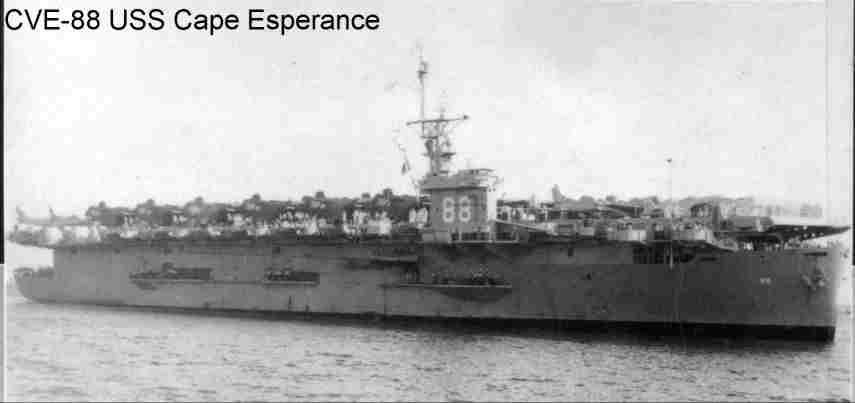
CAPE ESPERANCE (CVE-88) (name changed from TANANEK BAY on 6 November 1943) was launched 3 March 1944 by Kaiser Co., Inc., Vancouver, Wash., under a Maritime Commission contract; sponsored by Mrs. W. M. McDade; transferred to the Navy 9 April 1944; and commissioned the same day, Captain R. W. Beckius in command. Assigned to the Pacific Fleet, CAPE ESPERANCE made two voyages from the west coast to South Pacific bases between 26 May 1944 and 20 September, carrying new aircraft out, and returning with planes needing repairs. Loaded with combat-ready aircraft, she sailed from San Francisco 5 October to join TG 30.8 on 2 November in its support of 3d Fleet air strikes on Leyte and Luzon. From her decks, replacement aircraft roared off to the operating carriers, ready to take their part in pounding the Japanese out of the Philippines. Continuing to operate from Ulithi and Guam through January, CAPE ESPERANCE carried fresh aircraft to the far-ranging TF 38 for its strikes on Japanese air bases on Formosa and the China coast. In February, the escort carrier returned to the west coast to load new aircraft which she carried to Guam. This was the first of a series of such voyages in which she brought to the western Pacific a large number of the aircraft which roared over Iwo Jima, Okinawa, and the Japanese home islands in the massive carrier raids of the war's last months. At the close of the war, CAPE ESPERANCE sailed from San Diego to Pearl Harbor, returning to San Francisco 11 September 1945 with aircraft and passengers. She made similar voyages until decommissioned and placed in reserve at Bremerton, Wash., 22 August 1946. Recommissioned 5 August 1950, CAPE ESPERANCE reported to the
Military Sea Transportation Service for duty as an CAPE ESPERANCE received two battle stars for World War II service. |